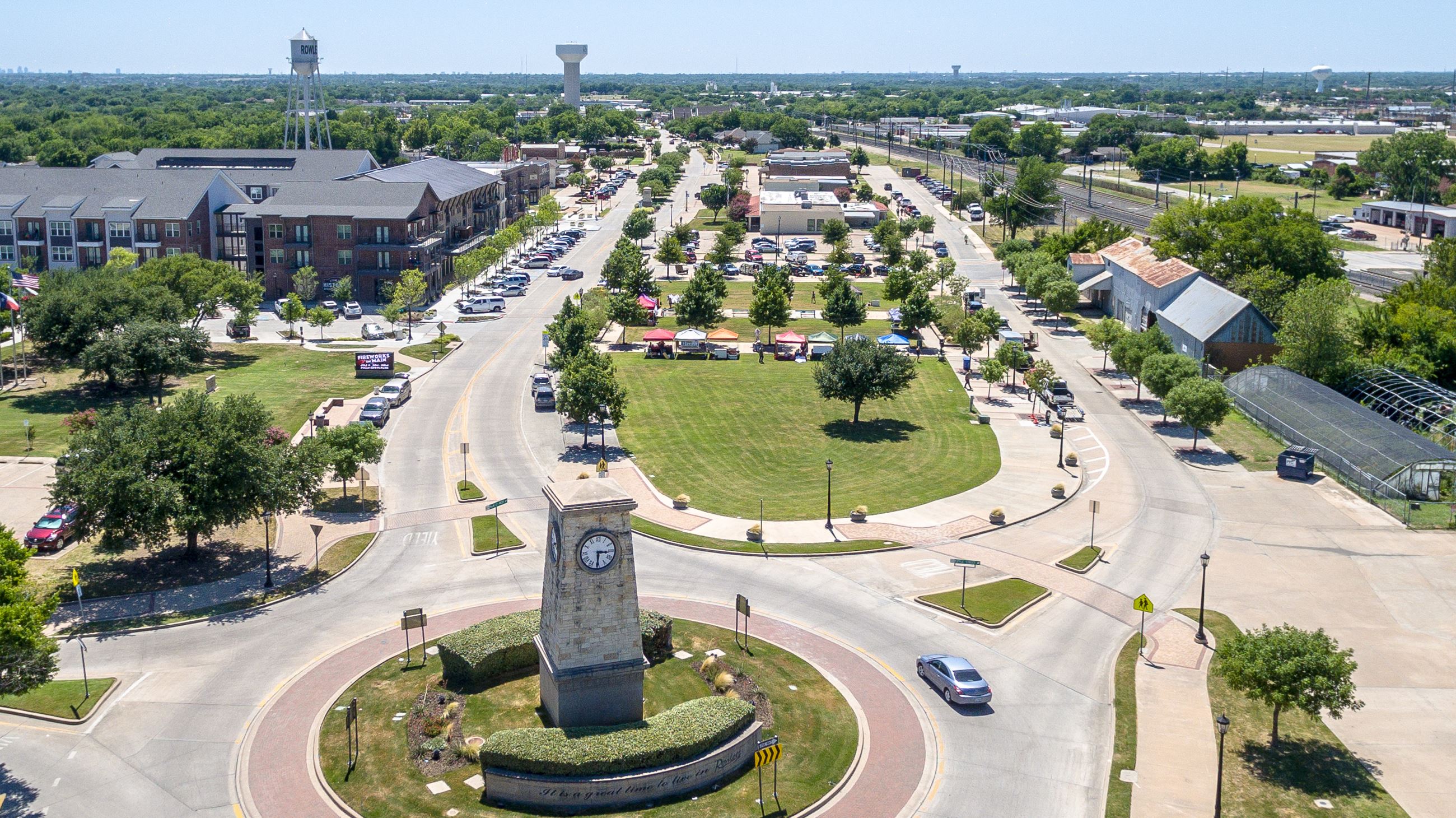
Lake Ray Hubbard is the largest reservoir in the DFW area—over 22,000 acres of water that shapes the outdoor lifestyle of every community on its shoreline. Rowlett owns the south shore. Rockwall and Heath own the north. And the neighborhoods between—Bayside, Lakeside Pointe, Liberty Grove, the Northshore, Pebble Beach, Dalrock Heights—are populated by families who moved here precisely because of what the lake represents: mornings on the water before the wind picks up, weekend afternoons that stretch from the boat dock to the fire pit, dogs that swim first and run through the backyard second.
Artificial Turf of Rowlett exists because the standard artificial turf installation industry does not understand this environment. The companies that send a crew to knock on doors after a home show, quote you a per-square-foot number over the phone, and install whatever product they bought in bulk this quarter are not thinking about what happens when a 70-pound Lab jumps off a dock, swims to shore, and sprints across your backyard fifteen times every Saturday. They are not thinking about the reflected UV off Lake Ray Hubbard in July, which is measurably more intense than inland sun exposure. They are not thinking about the Blackland Prairie clay that runs through the entire Lake Ray Hubbard basin and drains about as well as a parking lot.
We think about all of these things before we specify a product, before we dig a shovel into the ground, before we write a number on a quote sheet.
How We Work
Every project starts with a site visit. Not a virtual consultation, not a satellite measurement, not a quick walk around the yard while writing numbers in a notebook. We walk the property with you and ask questions that most companies do not ask: Where does water pool when it rains? Does your dog swim in the lake and come straight through the back gate? Do you host large outdoor events during lake season? Is there a slope toward the water? Does afternoon sun hit the south face or the west face, because those are different UV load problems with different product answers.
That information drives the installation design. The base depth, the drainage slope, the infill specification, the product grade, the edge termination method—all of these decisions are made from the conditions of your specific property, not from a menu of packages designed to be quoted quickly over a phone call.
The Base Is Everything
The part of an artificial turf installation that no one sees after it is finished is the part that determines whether it still performs correctly in year eight or whether it has drainage problems, surface irregularities, and failed seams. That part is the base.
In the Lake Ray Hubbard basin, proper base installation means excavating the native Blackland Prairie clay to sufficient depth, installing compacted decomposed granite in lifts with proper compaction equipment between each lift, engineering the drainage slope so water routes through the system and away from the structure, and placing a perforated drainage layer that handles the volume of water that North Texas storm events deliver. This takes more time and more material than the thin gravel layer tamped once by a hand plate compactor that most crews install.
We install bases this way because our installations are in service for fifteen to twenty years, and the waterfront and near-waterfront properties we work on in Rowlett, Rockwall, Heath, Sachse, and the broader lake basin do not give a substandard base a pass. Lake-area moisture conditions, clay soil expansion cycles, and the heavy use of lake-lifestyle households will find every weakness in a poorly built base within the first three years.
The Products We Specify
We do not carry a single product for every application because the right product for a Bayside waterfront dog yard is not the right product for a Princeton Park front lawn or a Rockwall Harbor District putting green. Pet turf applications get enzymatic antimicrobial infill that breaks down urine at the molecular level rather than masking it. Putting greens get short-pile, high-density fiber construction calibrated to your target surface speed during installation. Commercial applications get higher stitch-density products rated for the traffic volumes of a lakeside restaurant or marina facility.
Every product we specify is UV-stabilized for open-sky DFW sun exposure—the kind that comes off Lake Ray Hubbard on a cloudless July afternoon. UV stabilizers integrated into the fiber during manufacturing maintain color retention through the full warranty period. We do not install products with surface-applied UV treatments that degrade within a few years.
The Communities We Serve
Our primary service area is the Lake Ray Hubbard basin—Rowlett’s Bayside, Lakeside Pointe, Liberty Grove, Pebble Beach, Toler Lake, Princeton Park, Dalrock Heights, Cherokee Trace, Northshore, and Castle Hills neighborhoods; the Rockwall and Heath north shore; Garland’s eastern Liberty Grove corridor; Sachse; and Wylie’s south Lake Lavon edge. We also serve the broader east DFW corridor including Sunnyvale, Mesquite’s northern neighborhoods, Forney, Crandall, and the I-30 commute corridor into Dallas.
If you are in the Lake Ray Hubbard area and you have been managing a yard that cannot keep up with the lifestyle this place offers—contact us. The consultation is free, there is no sales pressure, and the site visit will give you more useful information about what a quality installation actually involves than any amount of online research will.